Curator's Talk: Edmund de Waal
Thursday 15 January, 6pm (Talk 6-6.50pm; Q&A 6.50-7.15pm)
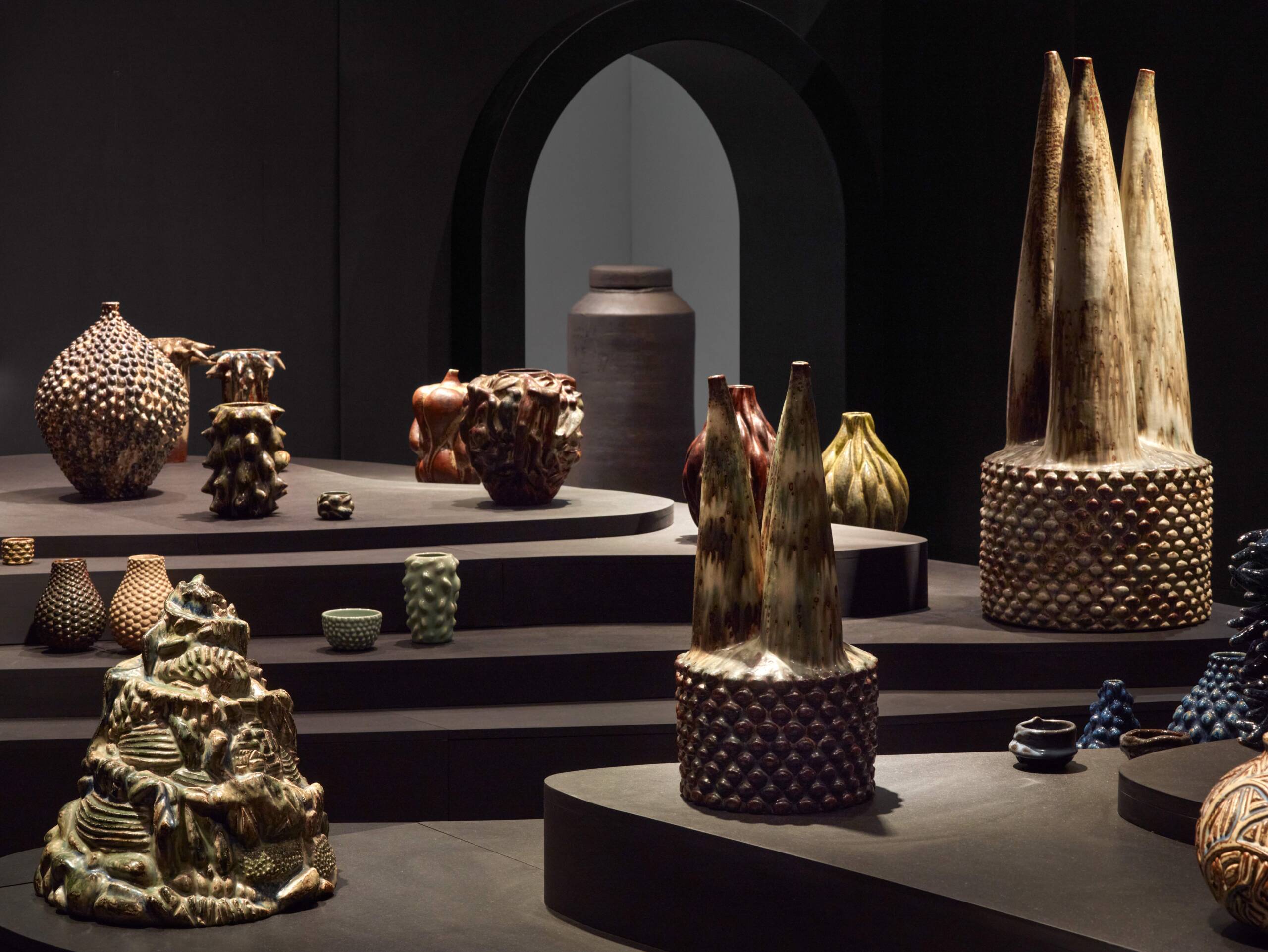
Artist and author Edmund de Waal has curated an exhibition of acclaimed Danish ceramicist Axel Salto (1889 – 1961), presenting an unparalleled opportunity to experience the full range of Salto’s work, most never before seen in the UK, at The Hepworth Wakefield.
In this talk, de Waal will reveal the richly imagined dialogue between himself and Salto – two artists who never met.
Playing with Fire will remain open until 6pm on Thursday 15 January for event ticket holders only.
A selection of pre-signed books by Edmund de Waal will be available to purchase on the evening after the talk. Please note, Edmund will not be available to sign books on the evening.

About Edmund de Waal
Edmund de Waal (b.1964) is an internationally acclaimed artist and writer, best known for his large-scale installations of porcelain vessels, often created in response to collections and archives or the history of a particular place. His interventions have been made for diverse spaces and museums worldwide.
de Waal is also renowned for his bestselling family memoir, The Hare with Amber Eyes (2010), and The White Road (2015) and Letters to Camondo (2021). His latest book an Archive (2025), published with Ivorypress, is an archival gathering together of texts that reflect on both his own family archives and the archives of the writers, artists, and spaces that he has spent years inhabiting.
He was awarded the Windham-Campbell Prize for non-fiction by Yale University in 2015. In 2021 he was awarded a CBE for his services to art. In 2024 he was awarded the Chevalier de l’Ordre des Arts et des Lettres.

‘Axel Salto is one of the greatest artists of the twentieth century. He created a unique body of ceramic work that continues to fascinate me. His sculptures seem to be on the point of change: glazes are caught in flux. Vases swell as if to burst. He cared about the ways that patterns change course, shift energies, how an animal becomes a person, a man metamorphoses into a stag. Ovid ran powerfully through his life. That moment of change, transformation, is the moment when poetry occurs.’ Edmund de Waal