Ronald Moody
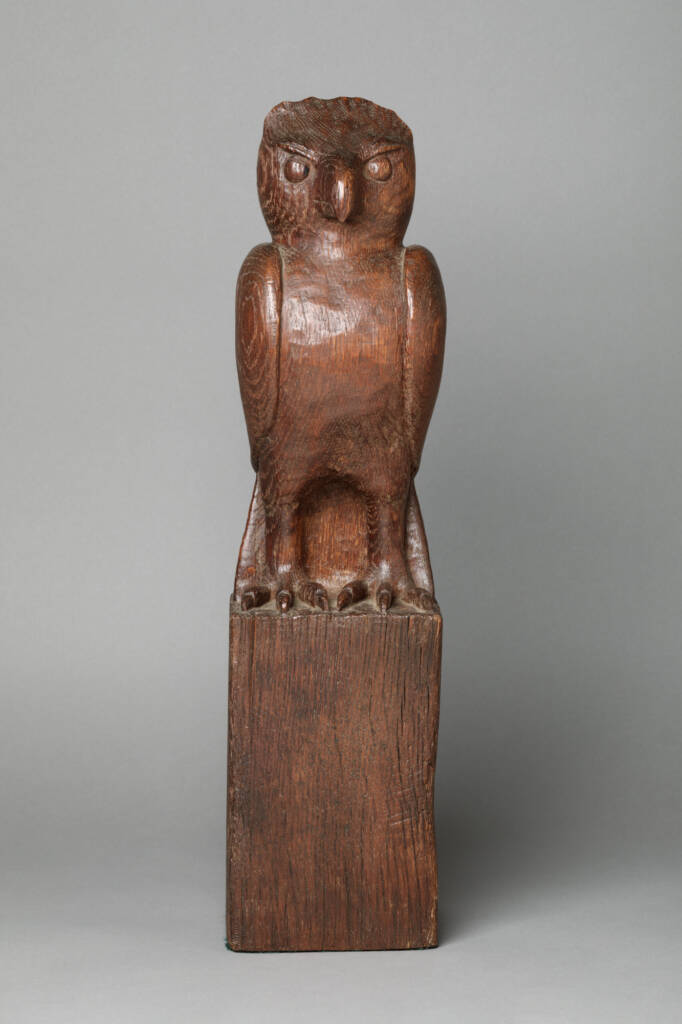
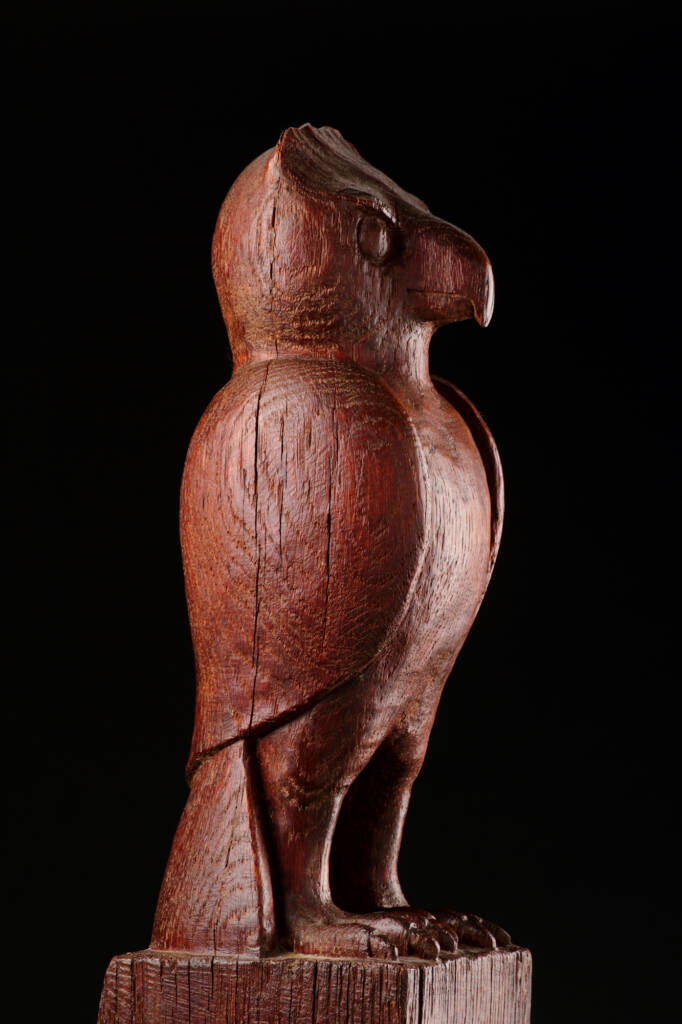
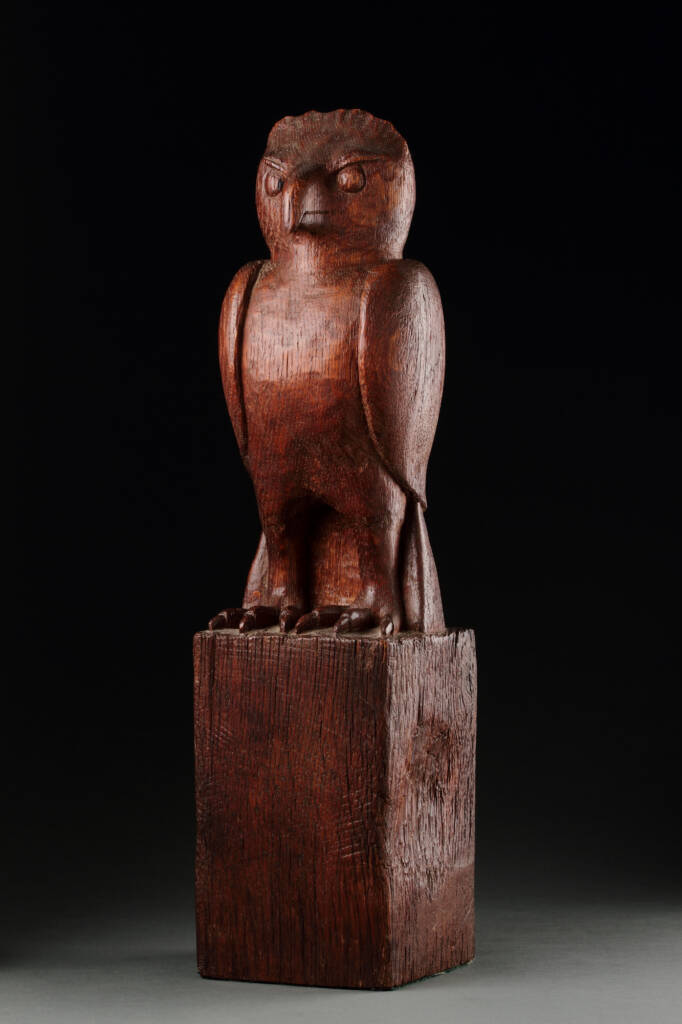
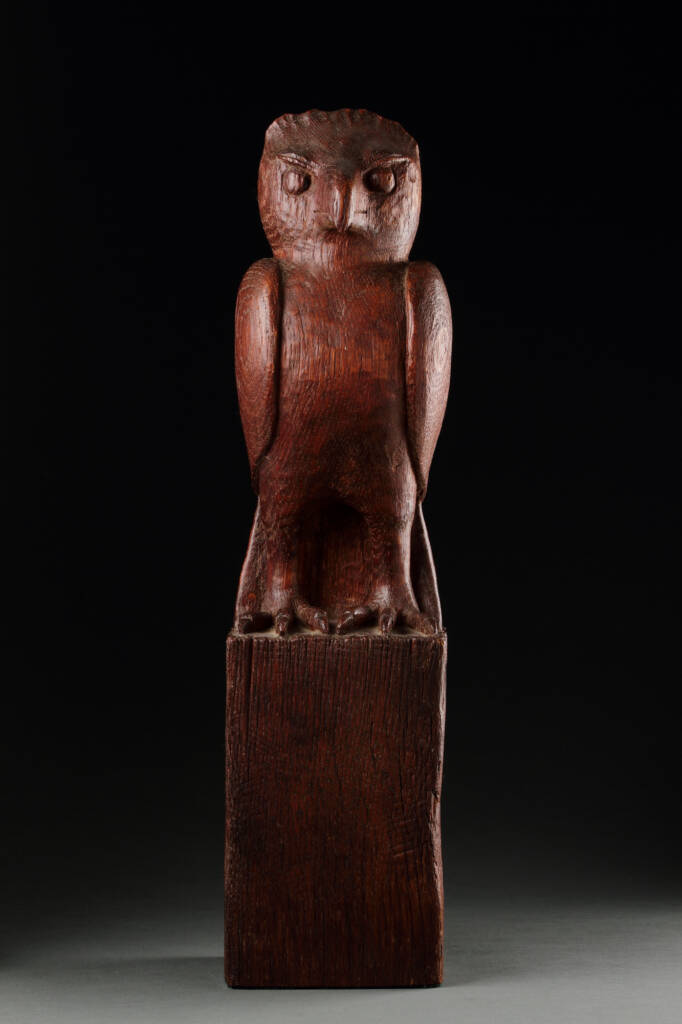
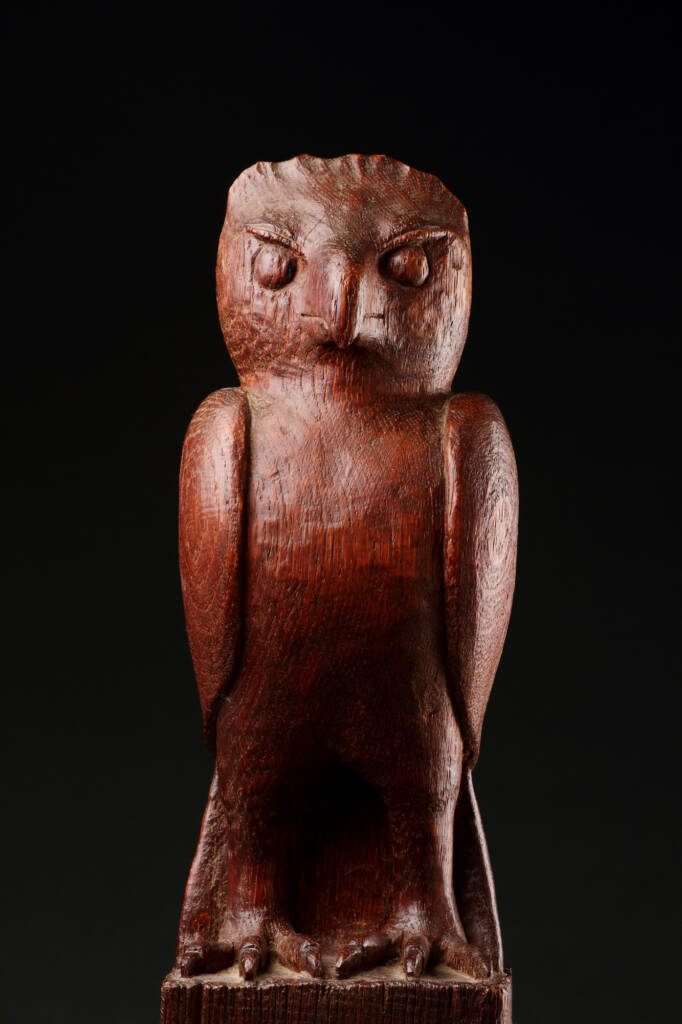
Harpy
1900-1984
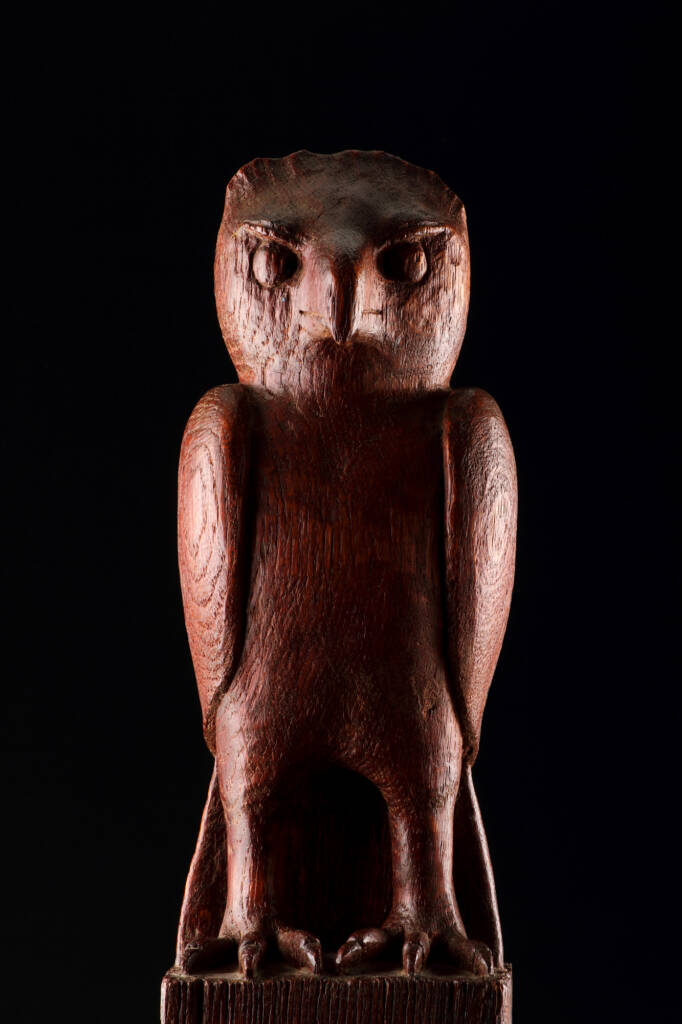
Harpy
1960/2
Oak
46 x 11 x 11 cm
Harpy (1960) is carved from oak and developed directly from an earlier work: Bird of Prey (1954) – a plaster sculpture that was the first in Moody’s series of bird forms, now held in Leicester Art Gallery and Museums Collection. Later, Moody carved this version in oak and renamed it Harpy. This shows the sculpture as part of a longer exploration of bird imagery in his work during the 1950s and early 1960s.
Harpy sits at an important stage in the evolution of Moody’s bird sculptures. Bird of Prey (1954) – plaster, Harpy (1960) – oak carving, Couroumon (1962–63) – concrete and fibreglass bird in Tate’s collection, and Savacou (1963–64) a major public sculpture connected to Caribbean mythology. This progression shows Moody moving from smaller experimental bird forms toward monumental mythological works.
Although Harpy itself is not explicitly based on Caribbean mythology, it plays a role in the development of ideas that later appear in Savacou. Moody’s bird sculptures became a vehicle for symbolic ideas such as flight, freedom and transformation. These themes later connected with Caribbean cosmology and myth in Savacou. Harpy represents an intermediate stage between experimentation and cultural symbolism.
The bird series—including Harpy—eventually led to the creation of Savacou, which directly prompted Moody’s return to Jamaica. In 1963, Moody was commissioned to create a public sculpture for the University of the West Indies at Mona. The result was Savacou, based on Carib cosmology and designed specifically for the Jamaican site. After the sculpture was created, Moody returned to Jamaica in October 1964, his first visit since leaving in 1923.
This visit allowed him to inspect the site for the sculpture reconnect with the landscape of his childhood, including the Blue Mountains and renew cultural and artistic connections with the Caribbean. In 1967 he joined the UK-based Caribbean Artists Movement.
In this sense, Harpy can be understood as a stepping stone that ultimately led to the commission which allowed Moody to return to Jamaica after more than forty years abroad.