Ronald Moody
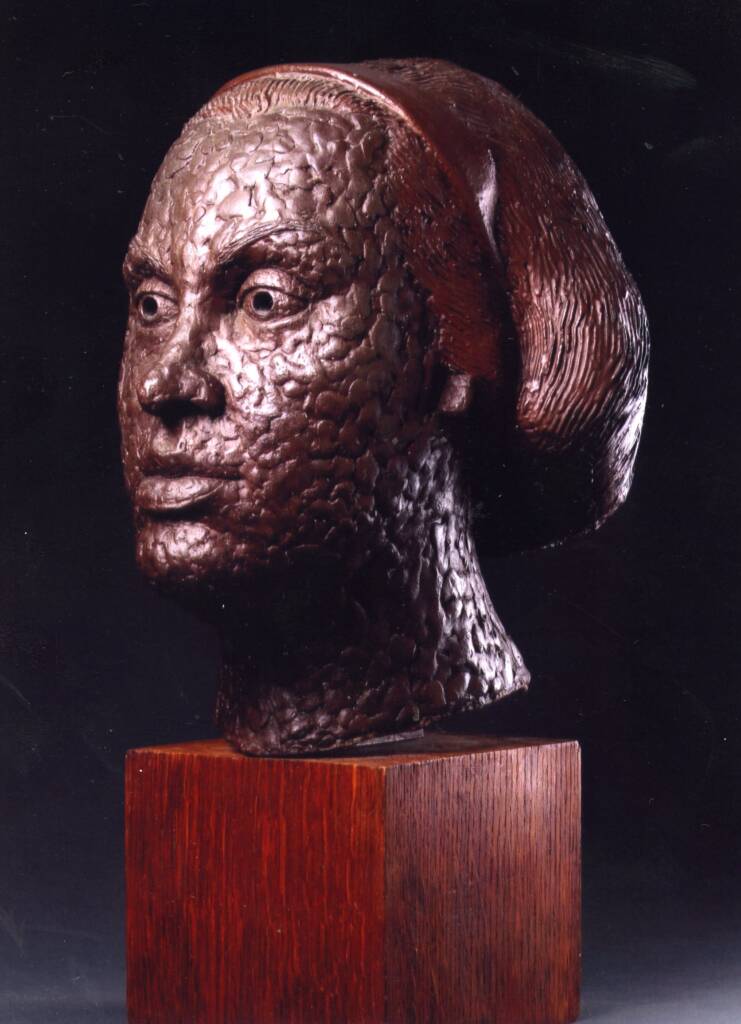
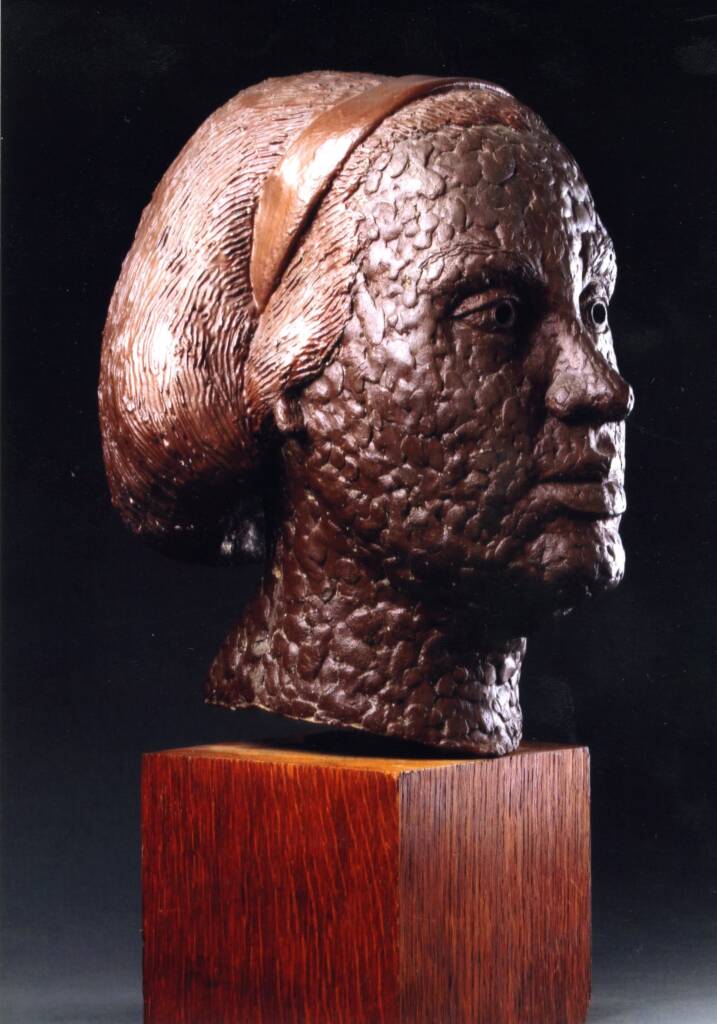
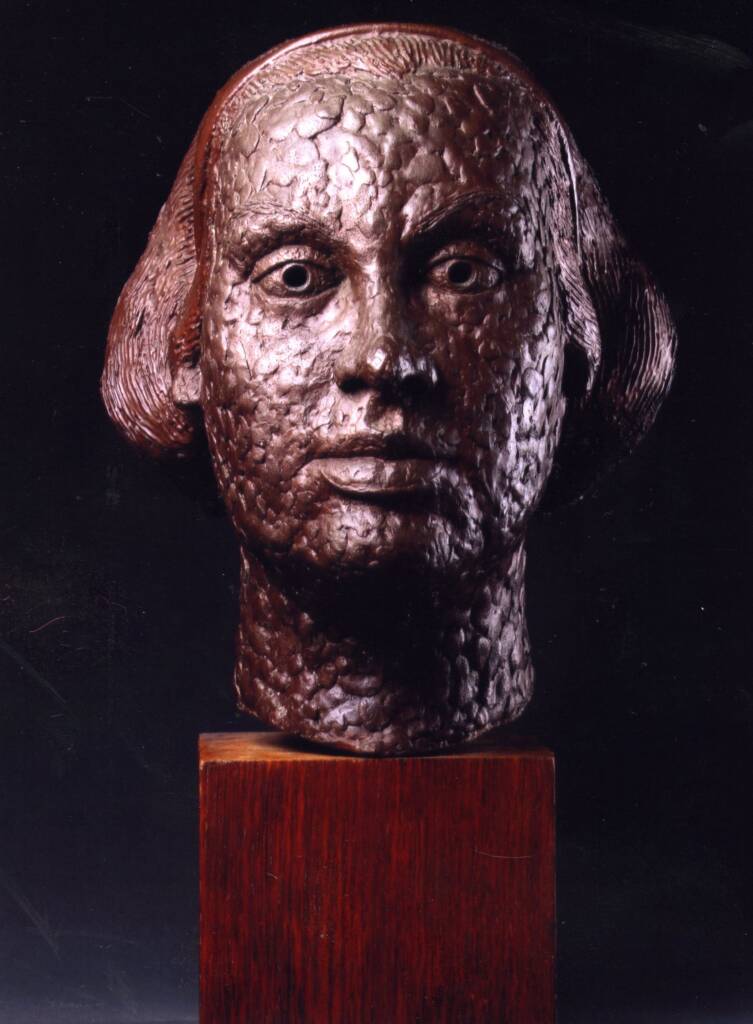
Cynthia 2
1900-1984
Bequeathed by Cynthia Hussey with Art Fund support
This is the first of portraits in this medium which juxtapose textual effect and patina. In each, the skin has a knobbly surface, developed during the artists experimentation with concrete, but on a much finer and more varied scale which contrasts subtly with other textures used. Here the combed contour of the hair suggests lightness, which is enhanced by burnished smoothness of the bandeau which retains it.
Cynthia Moody (1924–2013) was the niece of Ronald Moody and the central figure responsible for preserving and promoting his artistic legacy. She was a close lifelong friend, forming a strong personal alliance with him from wartime London onwards.
After Moody’s death in 1984, she inherited his estate, archive and artworks. Cynthia became the main archivist, curator and promoter of Moody’s work:
She had a background in film and media, which helped her organise, research and document a huge personal archive found in Moody’s flat, including letters, manuscripts and photographs and compiled research for a catalogue raisonné of his sculptures. Cynthia translated and researched documents in French and Dutch to contextualise Moody’s work internationally. She curated the archive almost like an artwork in itself, building a narrative of Moody’s life and artistic networks.
In 1995 she donated Moody’s archive to the Tate, making it available for researchers. One of her most notable achievements was the rediscovery of the sculpture Midonz (1937). The sculpture had been lost after being sent to the U.S. in the 1930s. Cynthia traced it through museum records and eventually located it at Hampton University Museum in Virginia, where it had been stored unseen for decades. She arranged its return to England in 1994.
Overall, Cynthia Moody played a crucial posthumous role in ensuring Ronald Moody’s reputation and scholarship survived.