Barbara Hepworth
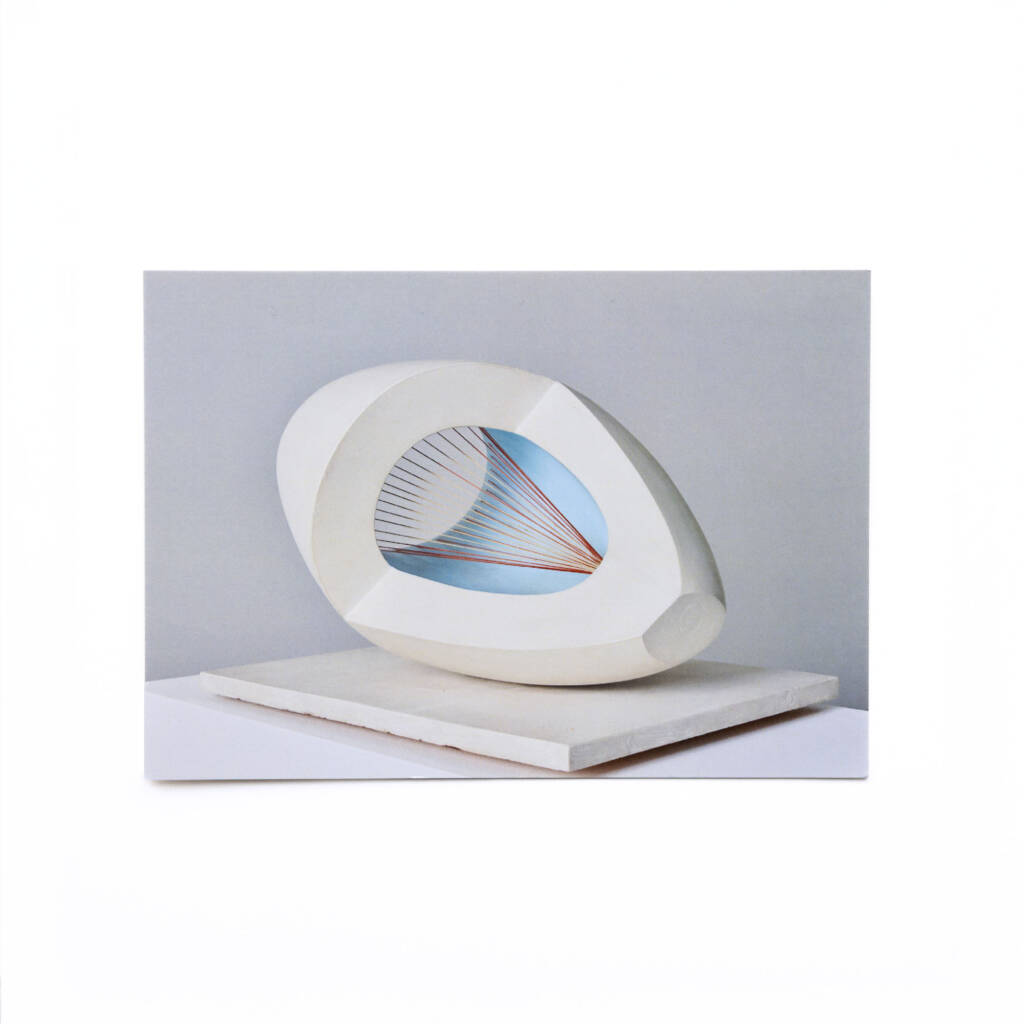
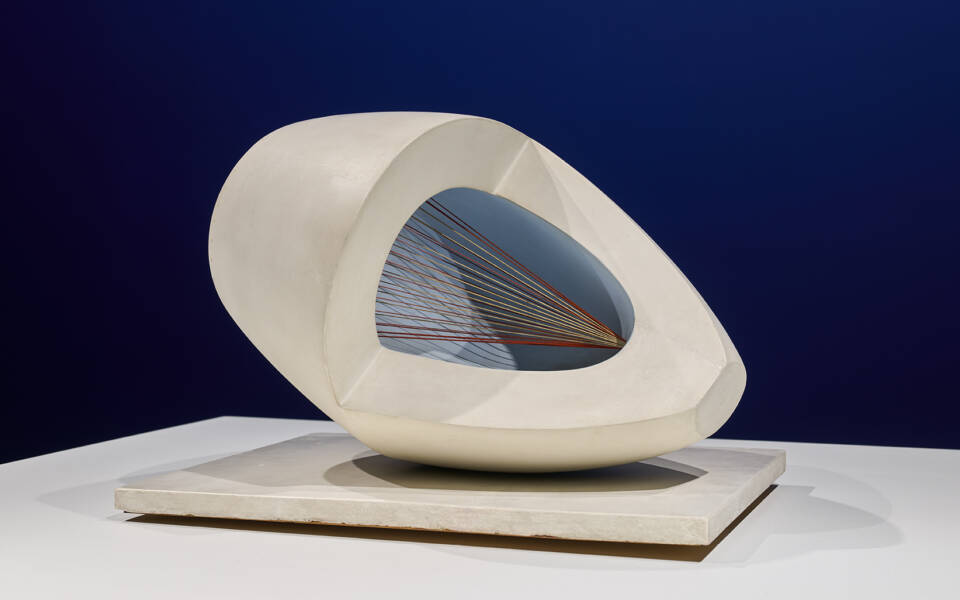
Sculpture with Colour (Oval Form) Pale Blue and Red
1903 – 1975
1943
Sculpture with Colour (Oval Form) Pale Blue and Red is one of the earliest examples of Hepworth’s carved and stringed sculptures. Created under challenging circumstances during the Second World War, this distinctive sculpture marks a breakthrough in Hepworth’s art.
In 1939, on the brink of the Second World War, Hepworth moved with her young family – including her four-year-old triplets – from London to the relative safety of St Ives, Cornwall. She had no studio space, and limited access to materials. It was not until 1942 that she had moved into a house large enough to have a small studio, and a year later was granted a special permit to obtain wood for carving. Even then, finding time to work was a challenge. She wrote to her friend, the critic E. H. Ramsden, ‘I’ve slowly discovered how to create for 30 mins, cook for 40 mins, create for another 30 & look after children for 50 & so on through the day. It’s a sort of miracle to be able to do it.’
and Red reflects the artist’s new experiences of the Cornish landscape around her. In 1951, she wrote of her use of colour and strings, ‘The colour in the concavities plunged me into the depth of water, caves, or shadows deeper than the carved concavities themselves. The strings were the tension I felt between myself and the sea, the wind or the hills.’